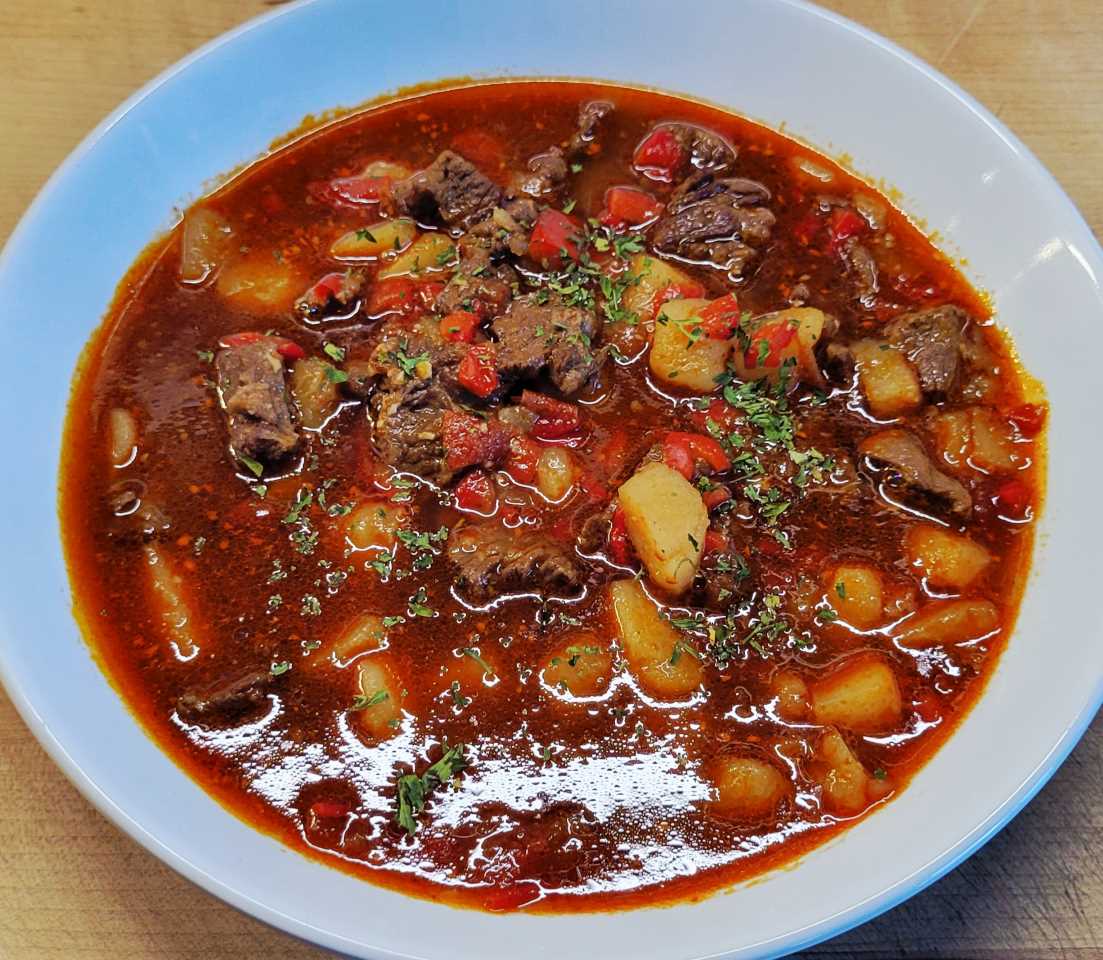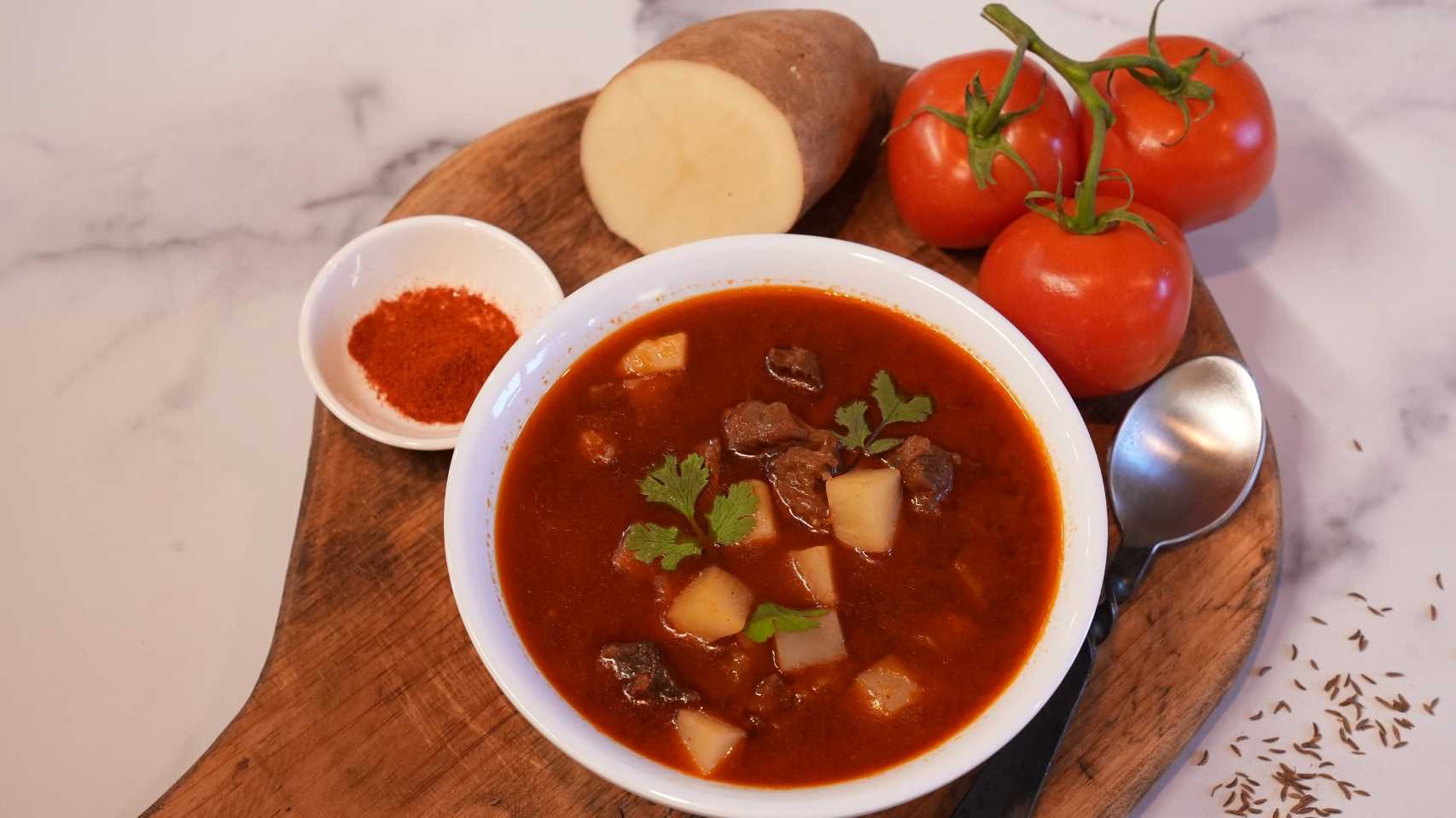



Bográcsgulyás - Hungarian Cauldron Goulash
Main Dish • Beef, Herbs & Spices, Potatoes, Vegetables
Already have Recipe Keeper?
Ingredients
- 5 tablespoons (80 g) lard
- 1 3/4 cups (300 g) diced onion
- 4 teaspoons (20 g) sweet paprika, more to taste
- 2 1/4 lbs (1 kg) beef, preferably something high in collagen like shank, short ribs, oxtail, or chuck, cut into about 1 inch (2.5 cm) cubes, or smaller if you like
- 4 teaspoons salt
- 1/2 teaspoon caraway seeds
- 2 cloves garlic, minced
- 2 1/4 lb (1 kg) potatoes, I used russet
- 1 green bell pepper
- 1 small tomato
- 1 quart (1 L) beef stock, more or less as needed
- Csipetke (pinched pasta), optional
Directions
- Place a large pot over medium high heat and melt the lard. Add the onions and stir to make sure they’re all coated in the fat. Reduce the heat to medium low and cook for about 30 minutes, or until they’re golden yellow and starting to brown, stirring occasionally so they don’t burn. You want to cook these low and slow to really develop the flavors.
- Take the pot off the heat and quickly stir in the paprika. It’s important to take it off the heat because the paprika can burn before it’s properly stirred in and will then turn bitter.
- Once the paprika is stirred in, you can put it back over the heat and stir in the meat and the salt. You can raise the heat a little bit if you’d like, then stir occasionally while the meat browns and starts to release its juices. Cook it until most of the liquid has cooked off and what remains in the pot has thickened, about 30 minutes.
- Stir in the caraway seeds and garlic. Add just enough cold water to go about halfway up the meat; you don’t want to cover the meat completely. Bring the pot to a simmer, then reduce the heat to low, cover the pot, and let it cook for at least 1 hour.
- While the goulash cooks, peel and chop the potatoes into about 1/2 inch (1 cm) cubes, then chop the bell pepper and tomato into small pieces.
- After 1 hour, or when the meat is nice and tender, add the chopped vegetables. Add just enough beef stock so that you can see it through the vegetables. Again, you don’t want to cover them completely. Turn the heat up to medium and bring it to a simmer, then reduce back to low, cover with the lid, and let it cook for about 45 minutes to 1 hour, or until the potato is fully cooked.
- Taste the goulash and add more salt or paprika as you like. Most modern recipes use much more paprika than this recipe, so add however much tastes good to you.
- If you’d like to add the csipetke, which is a type of small pasta shaped by pinching off pieces of dough, you can add it now and cook for another 5 minutes or so until the pasta is cooked. If you’re not adding the csipetke, simply add enough water or beef stock to get the soupy consistency that you like. Heat it through, then serve it forth.
Notes
- 6-3-24 1/2 Recipe
- The only thing I changed is I used shortening instead of lard.
- I used Hungarian Sweet Paprika
- Bográcsgulyás is a traditional Hungarian stew made with beef, vegetables, and paprika, cooked in a large pot called a bogracs. It's a hearty and flavorful dish often served at outdoor gatherings.
- The development and history of goulash mirrors the history of Hungary in a really interesting way, and the story goes something like this:
- 800s: A group of people from the Ural Mountains called the Magyars settled the area. Being herdsmen, they brought with them a dish of boiled meat or stew.
- 1400s: The Hungarian king imported Italian ingredients, like onions, and hired Italian chefs to please his new wife, who was from Naples.
- 1500s: Hungary becomes part of the Ottoman Empire, and thus ingredients like coffee and paprika enter Hungarian cuisine.
- 1800s: Two brothers invent a machine to remove the seeds and ribs from hot peppers in order to make sweet paprika.
- This recipe from the late 19th century reflects all of these developments, with the meat, onions, and sweet paprika. It is so delicious and really easy to make. If you’ve never had real Hungarian goulash (which is a soup, not a thick stew), give this a try!
- CC Notes
- Csipetke is a traditional Hungarian pasta dish, often served in a soup or stew. If you're looking for substitutes, consider these options:
- Similar Pasta Options
- Ditalini: A small, cylindrical pasta shape that works well in soups and stews.
- Macaroni: A popular pasta shape that can be used in a variety of dishes, including soups and casseroles.
- Small shells: Another pasta shape that can add texture and flavor to soups and stews.
- Alternative Ingredients
- Small dumplings: You can make your own dumplings using a mixture of flour, eggs, and water, or use store-bought dumplings.
- Gnocchi: These small, potato-based dumplings can add a hearty texture to soups and stews.
Photos