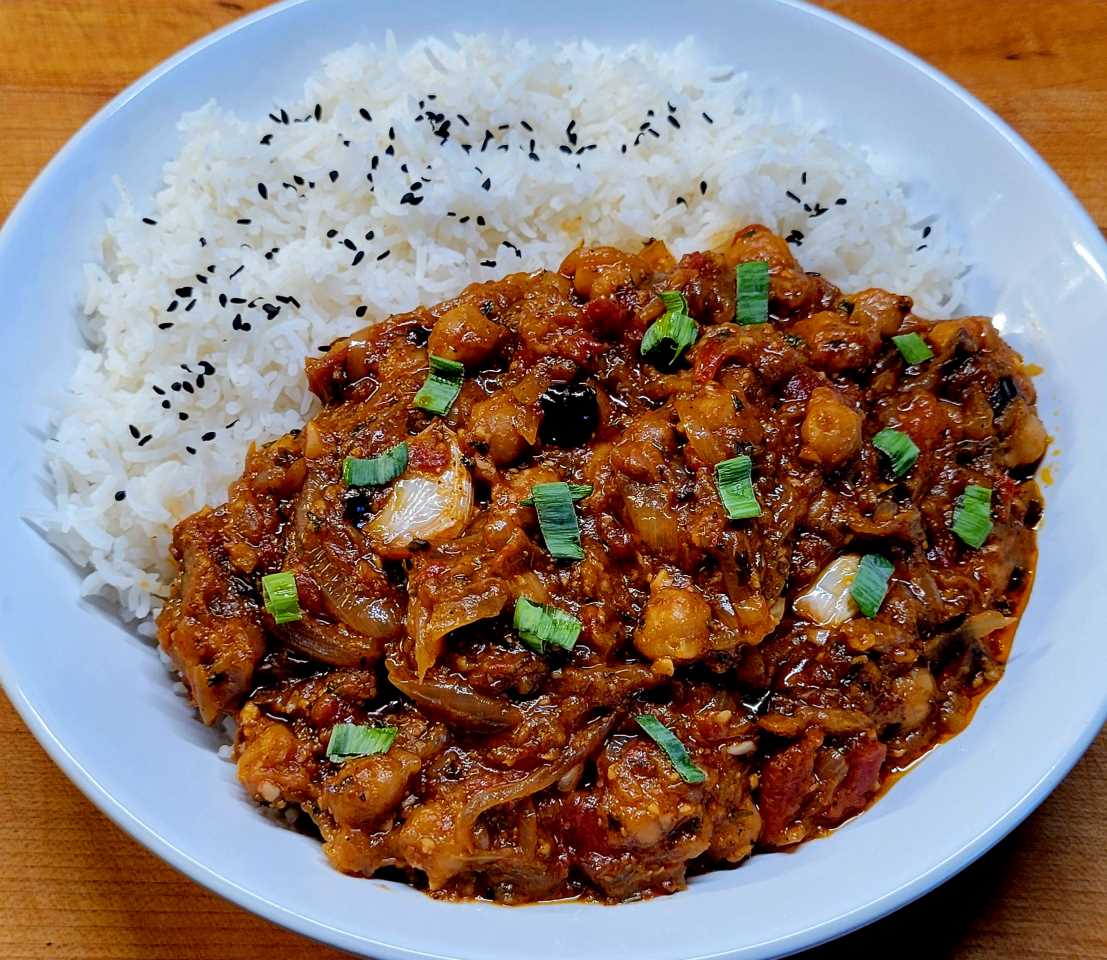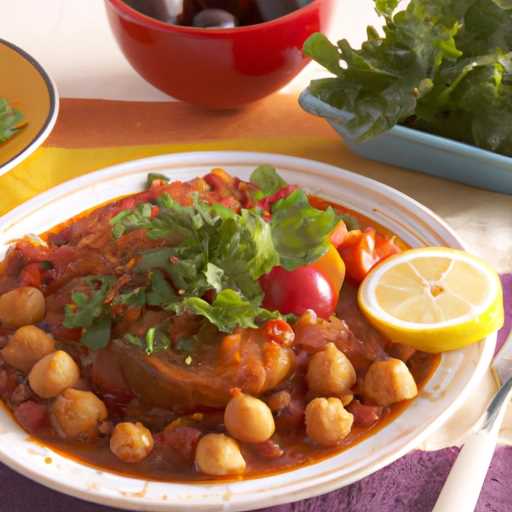



Kabsa - Arabian Stew
Soup • Herbs & Spices, Juice, Vegetables
Already have Recipe Keeper?
Ingredients
- 1 cup chickpeas, soaked overnight
- 2 lb (907 g) large eggplants
- salt
- 8 tbsp olive oil
- freshly ground black pepper to taste
- 2 large onions, thinly sliced
- 10 small cloves garlic, unpeeled
- 1 cup fresh or canned tomatoes, seeded and chopped (reserve juices)
- 1 tbsp tomato paste
- 3 cloves garlic, peeled and crushed with 1 tsp salt
- 3 tbsp chopped parsley
- 1 tbsp red wine vinegar
- 2 tsp sugar
- 0.25 tsp ground allspice or cinnamon
- fresh lemon juice
- sprigs of fresh mint
Directions
- Peel and halve the chickpeas, then set them aside.
- Remove and discard 3 vertical strips of skin from each eggplant, and cut the whole eggplant into 2.5-inch chunks.
- Salt the eggplant pieces and leave them to drain in a colander for at least 1 hour.
- Rinse the eggplant, gently squeeze out excess moisture, and pat dry with paper towels.
- Working in batches, lightly fry the eggplant chunks in 5 tbsp of hot oil until they turn golden brown. Then, drain them.
- Sprinkle the eggplant with pepper and set it aside.
- In a 2- or 3 qt (2.84 liter) casserole dish with a tight-fitting lid, warm the remaining olive oil and add the onions. Sweat the onions over low heat for 10 minutes, stirring occasionally, until they become limp and golden.
- Add the chickpeas and fry them for 2 minutes.
- Stir in the drained eggplant, unpeeled garlic, tomatoes and their juices, tomato paste, and pepper.
- Cover the casserole dish tightly and cook over reduced heat without stirring for 40 minutes.
- Carefully fold in the crushed garlic, parsley, vinegar, sugar, and allspice.
- Cook for an additional 10 minutes until the mixture thickens. (Up to this point, the dish can be made one day in advance. Cool, cover, and refrigerate to allow the flavors to meld).
- To serve, bring the dish to room temperature, and adjust the seasoning with salt, pepper, allspice, and a few drops of lemon juice to enhance the taste.
Notes
- Traditional Arabian Stew (Kabsa) from Saudi Arabia:
- Kabsa is a popular and flavorful stew originating from Saudi Arabia, often served at special occasions and gatherings. This traditional dish is a staple of Arabian cuisine, showcasing the rich flavors and aromas of the region.
- History:
- Kabsa has a long history in Saudi Arabia, dating back to the ancient trade routes that connected the Arabian Peninsula to other parts of the world. The dish is believed to have originated in the Najd region, where it was influenced by the local Bedouin cuisine.
- Description:
- Kabsa is a hearty stew made with:
- 1. Basmati rice: Long-grain basmati rice is a key ingredient.
- 2. Meat: Typically lamb or chicken, slow-cooked in a flavorful broth.
- 3. Spices: A blend of spices like cumin, coriander, cinnamon, and cardamom adds depth and aroma.
- 4. Aromatics: Onions, garlic, and sometimes tomatoes are sautéed to create a rich flavor base.
- Preparation:
- Kabsa is typically prepared by:
- 1. Cooking the meat: The meat is slow-cooked in a flavorful broth with spices and aromatics.
- 2. Adding rice: Basmati rice is added to the pot, absorbing the flavors of the broth.
- 3. Finishing touches: The dish is often garnished with fresh herbs, nuts, or dried fruits.
- Variations:
- Kabsa can be made with various meats, including:
- 1. Lamb: A classic choice for Kabsa.
- 2. Chicken: A popular alternative to lamb.
- 3. Camel: In some regions, camel meat is used for Kabsa.
- Cultural Significance:
- Kabsa is an important part of Saudi Arabian cuisine and culture, often served at:
- 1. Special occasions: Kabsa is a popular dish at weddings, holidays, and gatherings.
- 2. Family meals: Kabsa is also a common dish in everyday family meals.
- Tips:
- 1. Use high-quality ingredients: Fresh spices, basmati rice, and tender meat are essential to a delicious Kabsa.
- 2. Adjust the spice level: Adjust the amount of spices to suit your desired level of flavor.
- Kabsa is a flavorful and aromatic stew that showcases the rich culinary heritage of Saudi Arabia. Its history and cultural significance make it a beloved dish in the region and beyond.
Photos